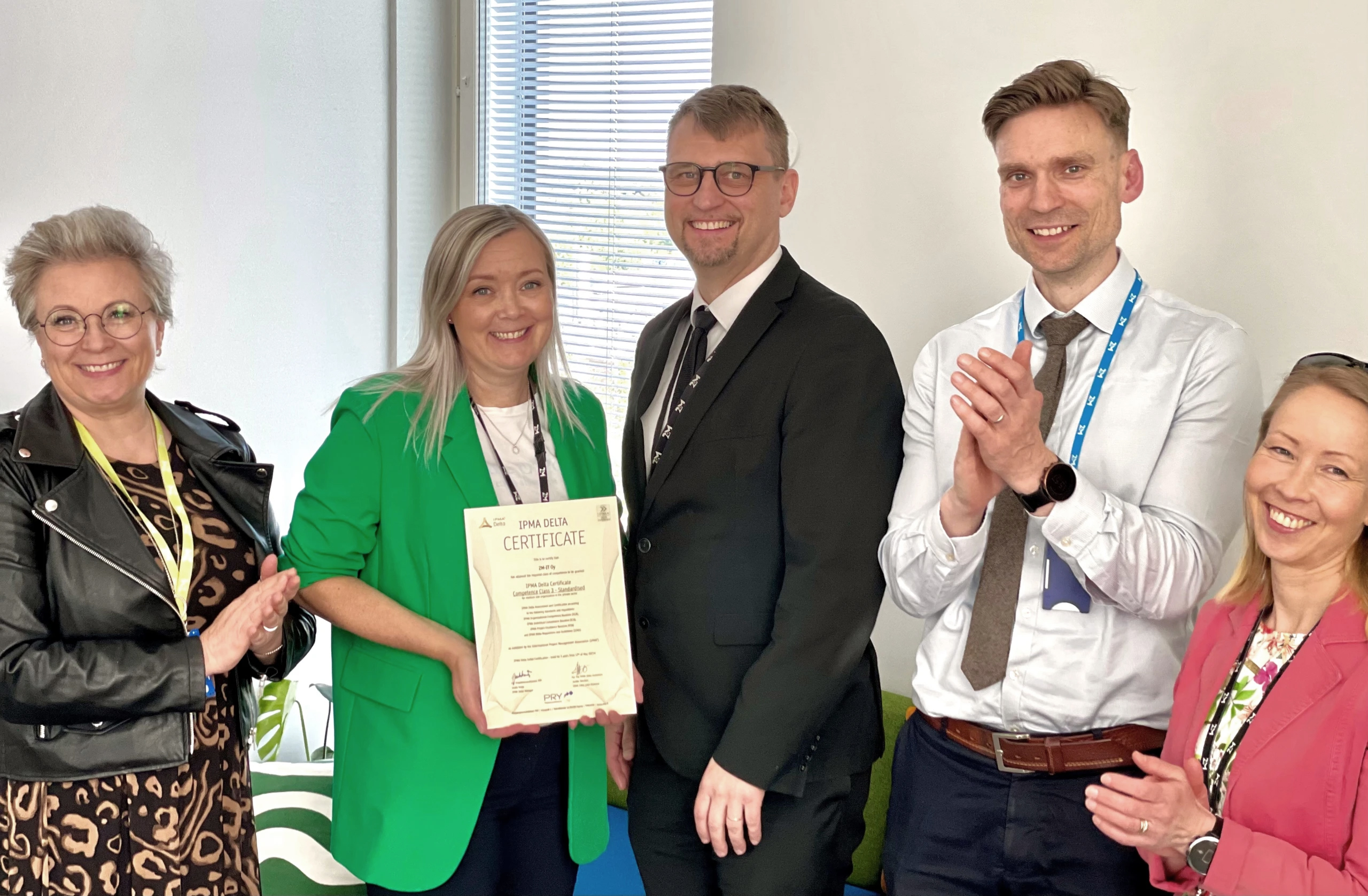
2M-IT adopted the ServiceNow service management system in 2024, as it provides more opportunities for the efficient development of IT services. The ServiceNow platform includes its own AI assistant, Now Assist.
At the beginning of 2026, 2M-IT expanded its use of ServiceNow by implementing the project management module (Strategic Portfolio Management). This module helps the entire project workflow proceed as planned and consistently towards its goal. Identifying development needs, resource management, project planning and time tracking – all these stages can be managed on a single platform, which clarifies the overall picture and makes project management easier.
Arto Lehtokari, Director of Solution Services at 2M-IT, believes that artificial intelligence enables continuous learning in the planning of projects and services. The company’s hundreds of completed projects serve as a background repository, against which new projects can be planned, and where tasks, the required workload and time can be better assessed. AI automates routine tasks and supports better decision-making. This improves productivity across the organisation and increases the impact of projects.
“Artificial intelligence can genuinely help an organisation learn from every project and situation – as long as the data is of high quality. I believe that in the future, AI will enable the automatic transfer of lessons learned, risks and successes to subsequent projects – this will speed up decision-making and improve project quality, especially in project planning. Expectations are high,” Lehtokari states.
“Project management should always be based on existing facts, theory and experience. That is why it is important that there is feedback in work processes, which encourages learning from each situation. AI can help collect and utilise these lessons from projects and work, so that decisions are based on real information rather than just intuition,” says Lehtokari.
Artificial intelligence in everyday services of wellbeing areas – examples
According to Lehtokari, the impact of AI in wellbeing area service production has so far been fairly moderate, but developments have been seen especially in recently digitalised services such as pathology and imaging. The next development areas for wellbeing regions relate to automatic structured documentation, automatic summaries of patient and medication information, and real-time interpretation.
As a technology provider, 2M-IT is interested in developing operational management for the regions, for example by building forecasts for resource requirements and ward workloads. Different queues for wards, surgeries, outpatient clinics and home care resource forecasts can also be cost-effectively built with current systems.
There are still many services in wellbeing areas that can be improved through digitalisation, and after that, AI can be utilised to achieve the next leap in productivity.
The future: Developing customer and employee experience with AI
At 2M-IT, the focus is on developing customer and employee experience. The chosen perspective is frontline tools that combine all citizen service channels (app, chat, phone) into one entity. It is already natural to collect preliminary information via chat or voice bots and then transfer the matter to a human. In the future, various needs can be handled entirely with AI assistance, and the necessary information can be transferred to backend systems without human intervention. The vision for the future is that a citizen contacting the service never has to queue, but can advance their case significantly without an employee.
Arto Lehtokari emphasises that AI plays a significant role in the development of customer contact.
“The AI maturity level of CX/EX solutions is still developing, but I clearly see that AI helps improve both customer service and employee experience. With AI, we can bring transparency to processes and speed up service – no one has to queue on the phone anymore, and professionals can manage their work better. Investments should be directed at voice bots and centralised CX systems, as they allow the entire service path to be efficiently managed.”
Voice bots and centralised CX systems will enable comprehensive management of the customer journey – all information and transactions are in one system, which improves the quality and efficiency of the service. At the same time, employees’ daily work becomes easier, as the systems support customer service and reduce manual work. Professionals can manage processes more broadly, and AI supports decision-making by analysing customer data. Productivity and the impact of services increase.
Challenges and lessons – data quality is key
Lehtokari says that one of the greatest lessons in deploying AI solutions has been understanding where AI works well and where its benefits are still limited.
“Over the past year, we have learned where language models are suitable and where their use still falls short,” says Lehtokari.
AI only delivers benefits when the data is high-quality and up to date. For example, if the information underlying a chatbot is incorrect – such as wrong phone numbers or addresses – customer service suffers and AI cannot reliably assist users. Therefore, it is worth investing in data quality and continuous learning.
“If service information, phone numbers or opening hours are wrong, AI cannot assist the customer correctly. Data quality is extremely important, because chatbots cannot provide guidance if the data is not in order,” Lehtokari reminds.
You might be interested in learning more:
Intelligent Service Delivery at 2M‑IT – ServiceNow and the Opportunities of AI in Support Services